





Key takeaways
- Progressive overload: your lifts must trend up over time (load, reps, sets, ROM, or tempo).
- Calories: a consistent, modest surplus makes gaining muscle much easier.
- Protein quality + distribution: spread high-quality protein across 3–5 feedings/day (high-quality = complete proteins rich in all 9 essential amino acids, like whey/dairy, eggs, meat, fish; or complete plant options like soy, or complementary mixes such as legumes + grains).
- Recovery: 7–9 hours sleep and enough rest days to keep performance rising.
- Technique: clean reps through consistent range of motion beat “heavier, messier” reps.
Overview
Training hard and still not seeing muscle growth is frustrating—but it’s usually fixable. Muscle gain isn’t just about “lifting more.” It’s a systems problem: your training stimulus, calories, protein (especially essential amino acid availability), recovery, technique, cardio dose, tracking, and—sometimes—hormones and nutrient status all influence muscle protein synthesis (MPS) and the adaptations you’re chasing.
This guide breaks down why “lifting and eating protein” isn’t always enough and how to troubleshoot plateaus with research-backed steps. We’ll cover progressive overload, nutrition for muscle gain (including calorie surplus and optimal protein intake), recovery and sleep, exercise technique, cardio balance, tracking and mindset, and when to consider hormones and nutrients. By committing to small, consistent upgrades across these areas, your results tend to follow.
The Essential Role of Progressive Resistance Training
If your loads, reps, sets, range of motion, or tempo aren’t increasing over time, muscle gain typically stalls because the training stimulus stops progressing.⁵
Progressive resistance training means you regularly increase load, repetitions, sets, range of motion, or exercise complexity over time so your muscles are continually challenged. This progressive overload drives adaptation by creating new demands that your body must repair and grow stronger to meet.
Practical ways to apply progressive overload
| Method | How to implement |
|---|---|
| Add weight | Increase load ~2–5% once you can complete all prescribed reps with solid form. |
| Increase reps or sets | Add 1–2 reps per set or 1 set per exercise before raising load. |
| Change tempo | Slow eccentrics (e.g., 3–4 seconds lowering) or add pauses to increase time under tension. |
| Advance the variation | Move from machines to free weights, bilateral to unilateral, or deeper range-of-motion versions. |
Meeting Your Energy and Calorie Needs for Growth
If you’re not in a consistent, modest calorie surplus, it’s much harder to gain muscle—especially once you’re past the beginner stage.
Energy balance is the relationship between calories consumed and calories expended. For muscle building, aim for a positive energy balance—a consistent, modest calorie surplus.
A common issue is that many people unintentionally under-eat once training volume rises, or they choose foods that make it hard to sustain a surplus. When energy intake is low, protein balance tends to suffer, and it becomes harder to add lean mass.
A simple way to find your surplus
- Estimate maintenance: Track caloric intake and morning body weight for 7–10 days. If weight is stable, you’re near maintenance.
- Create a surplus: Add ~300–500 calories/day (smaller end if you gain fat easily; larger if you’re highly active).
- Reassess every 2–3 weeks: Aim for ~0.25–0.5% body weight gained per week plus steady strength increases.
- Prioritize nutrition for muscle gain: Build meals around whole-food carbs, high-quality protein, and healthy fats to fuel training and recovery.
Protein Intake: Quality, Timing, and Distribution Matter
For muscle growth, protein works best when you hit an effective daily total (many analyses suggest benefits plateau around ~1.6 g/kg/day for most lifters)⁶ and spread high-quality, EAA-rich protein across 3–5 feedings per day (instead of concentrating it in one meal).
Muscle protein synthesis (MPS) is the process by which your body builds new muscle proteins from amino acids in response to resistance training and feeding. Training provides the signal; dietary amino acids provide the raw materials.
Per-meal targets that actually map to MPS
Dose-response work reports that ~0.10–0.14 g EAA/kg per dose (often described as roughly ~0.25–0.30 g protein/kg per dose) can maximize MPS in energy balance—useful as a practical anchor for meal sizing and distribution.⁴
Translated: per meal, aim for about 25–40 g of high-quality protein for most adults. That’s the real-world version of “~0.25–0.30 g/kg protein per dose.”⁴
Quick examples by body weight (per meal):
- 150 lb (68 kg): ~17–20 g protein
- 180 lb (82 kg): ~20–25 g protein
- 200 lb (91 kg): ~23–27 g protein
- 250 lb (113 kg): ~28–34 g protein
Food examples that typically hit the target:
- Whey protein (1 scoop): 25 g protein, 11.6 g EAAs
- Low-fat Greek yogurt (200 g / about 1 cup): 20 g protein, 5.1 g EAAs
- Eggs (4 large): 25.2 g protein, 11.2 g EAAs
- Chicken breast, cooked (5 oz): 45.5 g protein, 20.0 g EAAs
- Top sirloin steak, cooked (5 oz): 38.4 g protein, 15.4 g EAAs
- Firm tofu (200 g): 34 g protein, 13.0 g EAAs
- Lentils + rice (1 cup cooked lentils + 1 cup cooked white rice): 22.3 g protein, 8.1 g EAAs
Make protein work harder for you
Distribute protein across the day: Rule of thumb per meal, 25–40 g high-quality protein ≈ ~10–16 g EAAs. If using EAAs alone, aim for ~10–15 g EAAs as a ‘meal-equivalent’ dose.⁴
Favor higher-quality proteins: EAA profiles and protein format influence anabolic responses; when meals are small, EAA density matters.¹
- Higher EAA density examples: whey (25 g protein / 11.6 g EAAs), eggs (25.2 g / 11.2 g), chicken (45.5 g / 20.0 g), tofu (34 g / 13.0 g).¹¹
- Lower EAA density examples (single plant proteins): foods like rice or wheat tend to be lower in certain EAAs, so you often need larger servings or a complementary combo (e.g., lentils + rice = 22.3 g protein / 8.1 g EAAs).¹¹
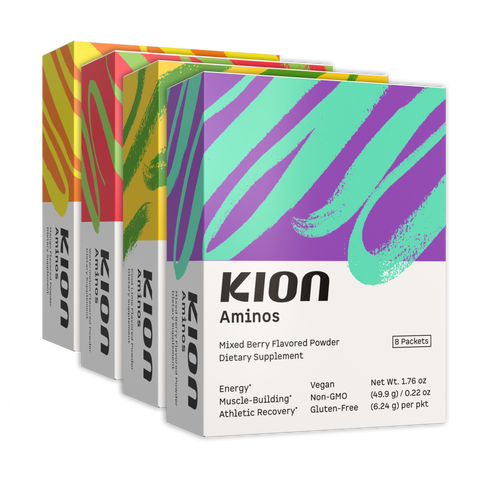
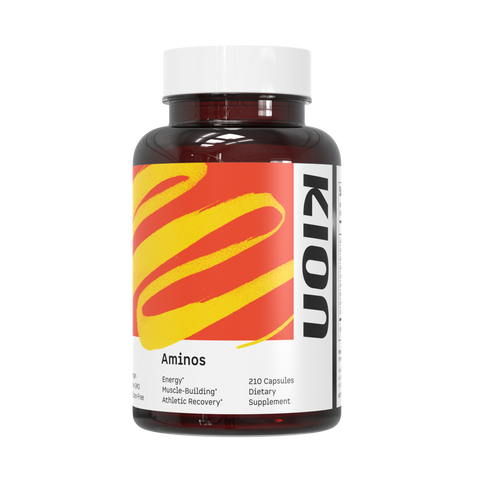
Supplement strategically: Free-form EAAs can come in handy when a complete protein meal isn’t practical, appetite is low, or you want a low-calorie option around training or between meals. EAAs aren’t a substitute for total daily energy/protein, but they can support getting enough essential building blocks.
Essential amino acids (EAAs) and muscle building
Essential amino acids (EAAs) are the nine amino acids your body can’t synthesize and must get from the diet. They’re required to build new muscle protein, and EAA availability helps govern the anabolic response to feeding.
Reviews on muscle protein metabolism emphasize that the availability of essential amino acids is a primary driver of the anabolic response to feeding, and leucine (an EAA) has a notable signaling role in this process.¹
In a controlled trial in young females, postexercise myofibrillar protein synthesis did not differ after ingesting 1.5 g EAA versus 15 g or 20 g whey protein, suggesting that in that population/context, lower EAA doses may still provide a sufficient stimulus.²
In older women, leucine-enriched EAA drinks (at two different doses) were compared with a large whey bolus when examining MPS responses—highlighting how EAA formulation/dose can matter when meal size, appetite, or calories are constraints.³
Who may benefit most from an EAA supplement
EAAs aren’t “magic”—they’re a practical tool when getting enough high-quality protein is hard or when calories are limited.
Common scenarios:
- Older adults / sarcopenia risk (including many post-menopausal women): Age-related “anabolic resistance” can mean you need a stronger amino acid signal per meal. Trials in older women show leucine-enriched EAA drinks can stimulate MPS similarly to large whey boluses, which may be helpful when appetite is low or meals are smaller.³
- Dieters / people cutting (energy deficit): In controlled energy deficit conditions, adding free-form EAA to whey improved whole-body net protein balance more than whey alone or a mixed meal, supporting the idea that EAA-enrichment can be useful when calories are constrained.⁹


- Athletes with unavoidable energy deficits (e.g., weight-class sports, field/military-type demands): The same energy-deficit work explicitly notes groups who regularly experience unavoidable deficits and are at risk of losing lean tissue—making low-calorie EAA strategies relevant in-season or during hard blocks.⁹
- Vegetarians/vegans or plant-forward eaters: You can build muscle on plant proteins, but some single plant proteins are lower in certain EAAs. If you’re relying heavily on plant sources or smaller meals, an EAA supplement can help “fill gaps,” or you can emphasize higher-quality plant proteins (e.g., soy) and complementary blends (e.g., legumes + grains). Research also shows wheat protein ingestion can raise MPS in older men, supporting the idea that plant proteins can work—especially when total intake is sufficient.¹⁰
- People who struggle to eat enough (low appetite, busy schedules, GI tolerance): EAAs can provide a concentrated EAA dose with minimal calories and low volume—useful between meals, pre/post training, or when a full meal isn’t realistic.¹
Practical timing:
- Daily baseline: Use EAAs as a small, consistent daily dose to support essential amino acid availability—especially on busy days when protein is uneven.
Between meals: Helpful when you have long gaps between protein-containing meals. - Pre-workout (often the most practical): Take EAAs 30–60 minutes before training if you’re training fasted, your last protein meal was >3–4 hours ago, or you want amino acids “on board” during the session.
- Post-workout: If you can’t eat a full protein meal within ~1–2 hours after training, EAAs can act as a bridge until your next meal.
- During a cut: A low-calorie way to keep protein quality high when meal size is limited.⁹
Optimizing Recovery: Sleep, Rest, and Avoiding Overtraining
If you’re not recovering well enough to keep performance rising week to week, muscle gain slows—even if your program looks perfect on paper.
Overtraining (or simply under-recovering) is when training intensity and frequency outpace your ability to recover. Even short-term sleep loss can shift the body toward a more catabolic environment and has been shown to blunt muscle protein synthesis in controlled settings.⁷ Muscle growth happens during rest, when the body repairs tissue and adapts to training stress.
- Sleep for muscle building: Prioritize 7–9 hours nightly to support recovery and performance.
- Program rest: Schedule at least 1–2 full rest days weekly and rotate hard sessions to manage fatigue.
- Active recovery: Low-intensity cardio, mobility, and walking can support circulation without adding much stress.
- Watch for under-recovery: Persistent soreness, irritability, sleep disruption, and performance dips often call for a deload week or extra recovery.
The Importance of Proper Technique and Exercise Selection
When reps aren’t consistent (same range of motion, same control), it’s harder to apply progressive overload to the target muscle—so growth slows even when you train hard.
If your technique is loose or you rely on momentum, you reduce tension on the target muscle and limit growth. Variety and progression in exercise selection also matter, but too much randomness makes progress hard to measure.
Practical form upgrades
- Film top sets and check bar path, tempo, depth, and symmetry.
- Standardize range of motion so week-to-week progress is comparable.
- Consider a session with a qualified coach if you’re stuck.
Common mistakes to avoid
- Short range of motion that skips the hardest portion of the lift.
- Ego lifting with loads that break form.
- Random exercise changes that prevent progression on key patterns.
Balancing Cardio and Conditioning Without Hindering Muscle Gains
Cardio can support health and recovery, but too much high-fatigue endurance can reduce lifting performance, recovery, and appetite—making it harder to gain muscle. Meta-analytic data on concurrent training suggest the interference effect is most likely when endurance volume is high and when running is emphasized.⁸
Guidelines for muscle-focused athletes
- Prioritize resistance training if muscle gain is your main goal.
- Keep high-fatigue endurance work in check if it disrupts recovery or appetite.
- Favor low-impact zone 2 or short intervals when conditioning is needed.
| Approach | Why it helps or hurts | Examples |
|---|---|---|
| Short intervals (10–20 min) | Improves conditioning with a smaller time/fatigue cost | 6–10 rounds of 30s hard/90s easy on a bike |
| Low-impact zone 2 (20–30 min) | Supports cardiac health with low muscle damage | Incline walk, easy cycling |
| Long steady-state, frequent | Can interfere with recovery and surplus | Daily long runs near lower-body days |
Tracking Progress, Consistency, and Mindset for Sustainable Growth
Without tracking, you can’t tell whether the bottleneck is progressive overload, calories, recovery, or technique—so plateaus drag on longer than they need to.
Track workouts (weights, sets, reps, tempo), note form cues, and assess trends in strength and body composition—not just scale weight. Progress is gradual; consistent effort beats perfect days.
Consistency checklist
- Plan training windows and protect them.
- Log every session and beat at least one metric weekly (load, reps, range).
- Eat on a schedule that supports your calorie and protein targets.
- Avoid program-hopping; stick with a plan for 8–12 weeks before overhauling.
- Hormonal and Nutrient Factors That Affect Muscle Building
If training progression, a calorie surplus, protein distribution, and sleep are consistent for 8–12 weeks and you’re still stalled, hormones or nutrient deficiencies may be worth checking with a clinician.
Muscle gain depends on training, sufficient calories, amino acid availability, and recovery working together. If you’ve nailed training, nutrition, and sleep yet still stall, discuss blood work with a qualified clinician.
Nutrients that can influence training quality and recovery include vitamin D, iron, zinc, magnesium, and essential fatty acids. Correcting deficiencies often improves energy and training output.
Frequently Asked Questions
Why am I not progressively overloading my workouts?
You may be repeating the same loads and rep schemes without planned increases. Add small increments in weight, reps, sets, tempo, or variation to keep muscles adapting.
Can eating enough protein alone guarantee muscle growth?
No. Without hard, progressive resistance training and a modest calorie surplus, extra protein won’t translate into maximal muscle gain.
How important is sleep and recovery for muscle building?
Critical—most adaptation happens between sessions, and consistent recovery supports progressive overload.
Could my training technique be limiting my muscle gains?
Yes. Poor form and momentum reduce tension on target muscles, so refine technique, standardize range of motion, and progress methodically.
How long does it typically take to see noticeable muscle growth?
Many lifters notice visible changes after 8–12 weeks of consistent progressive training, sufficient calories, and smart recovery.
Better Aminos

Scientific Research
- Church DD, Hirsch KR, Park S, et al. Essential Amino Acids and Protein Synthesis: Insights into Maximizing the Muscle and Whole-Body Response to Feeding. Nutrients. 2020;12(12):3717. doi:10.3390/nu12123717.
- Jameson T, et al. Postexercise myofibrillar protein synthesis rates do not differ following 1.5 g essential amino acids compared with 15 and 20 g of whey protein in young females. American Journal of Physiology – Endocrinology and Metabolism. 2025;328(3):E420–E434. doi:10.1152/ajpendo.00365.2024.
- Wilkinson DJ, Bukhari SSI, Phillips BE, et al. Effects of leucine-enriched essential amino acid and whey protein bolus dosing upon skeletal muscle protein synthesis at rest and after exercise in older women. Clinical Nutrition. 2018;37(6 Pt A):2011–2021. doi:10.1016/j.clnu.2017.09.008.
- Gwin JA, Church DD, Hatch-McChesney A, et al. Effects of high versus standard essential amino acid intakes on whole-body protein turnover and mixed muscle protein synthesis during energy deficit: a randomized, crossover study. Clinical Nutrition. 2020. doi:10.1016/j.clnu.2020.07.019.
- Chaves TS, et al. Effects of Resistance Training Overload Progression Protocols on Strength and Muscle Mass. International Journal of Sports Medicine. 2024;45:504–510. doi:10.1055/a-2256-5857.
- Morton RW, Murphy KT, McKellar SR, et al. A systematic review, meta-analysis and meta-regression of the effect of protein supplementation on resistance training-induced gains in muscle mass and strength in healthy adults. British Journal of Sports Medicine. 2018;52(6):376–384.
- Lamon S, Morabito A, Arentson-Lantz E, et al. The effect of acute sleep deprivation on skeletal muscle protein synthesis and the hormonal environment. Physiological Reports. 2021. doi:10.14814/phy2.14660.
- Wilson JM, Marin PJ, Rhea MR, Wilson SMC, Loenneke JP, Anderson JC. Concurrent training: A meta-analysis examining interference of aerobic and resistance exercise. Journal of Strength and Conditioning Research. 2012;26(8):2293–2307.
- Pasiakos SM, et al. Essential amino acid-enriched whey enhances post-exercise whole-body protein balance during energy deficit more than iso-nitrogenous whey or a mixed-macronutrient meal: a randomized, crossover study. J Appl Physiol. 2021. PMCID: PMC7791816.
- Gorissen SHM, Horstman AM, Franssen R, et al. Ingestion of Wheat Protein Increases In Vivo Muscle Protein Synthesis Rates in Healthy Older Men in a Randomized Trial. Journal of Nutrition. 2016;146:1651–1659. doi:10.3945/jn.116.231340.


